







Execution Intelligence for Manufacturing
Manufacturers across APAC build to plans. Markets move to signals. The gap between the two is measured in overbuilt inventory, missed demand, and working capital that cannot move.
By the time the data reaches the factory, the market has already shifted.
ADAMS connects what is selling to what gets built, in real time.
Where Plans Meet Reality
Manufacturing success depends on knowing what the market needs before the production run is committed.
Without real-time demand signals, even the most sophisticated production plan generates the wrong output.
A factory builds to last quarter’s forecast while a high-demand SKU runs out at the outlet. Overproduction locks working capital in slow-moving inventory. A new product launch creates a demand spike that the supply chain cannot respond to in time. Across APAC’s multi-market manufacturing networks, these gaps are constant and costly.

One Coordinated System
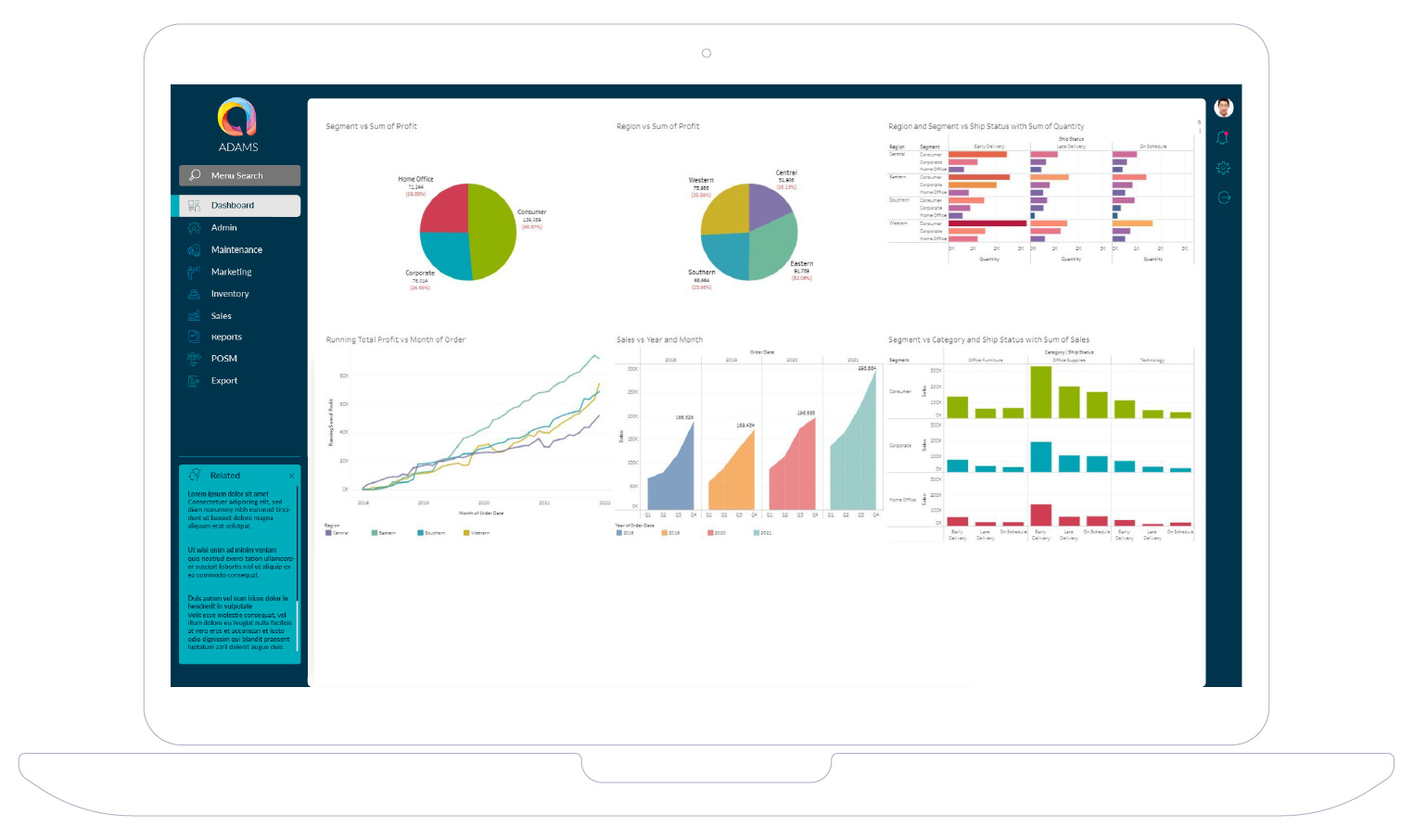
ADAMS provides the execution operating system that connects factory planning with outlet-level demand, real-time sales signals, and financial performance, giving manufacturers coordinated control from plant to market.


Measurable Outcomes
Manufacturing organisations using ADAMS achieve measurable outcomes across multi-market networks in APAC:

Production Efficiency
Up to 50% reduction in overproduction across product lines

Delivery Reliability
99%+ on-time delivery performance

SKU Accuracy
Elimination of wrong-SKU overbuilds driven by stale forecasts

Working Capital
Working capital released from excess inventory and redeployed where the business needs it

Demand Alignment
Production aligned directly to real market demand, not last quarter’s plan
From Fragmented Execution to Coordinated Markets
Forecast-Only Planning
Overproduction of Wrong SKUs
Delivery Delays
Manual Reconciliation
Data-Driven, Signal-Based Forecasting
Demand-Aligned Output by Market
99%+ On-Time Fulfilment
Live Data Sync from Plant to Outlet
Forecast-Only Planning
Overproduction of Wrong SKUs
Delivery Delays
Manual Reconciliation
Data-Driven, Signal-Based Forecasting
Demand-Aligned Output by Market
99%+ On-Time Fulfilment
Live Data Sync from Plant to Outlet
The Structural Advantage
Manufacturers that connect production planning to real demand signals gain something their competitors cannot quickly replicate: the ability to build what markets actually need before the window closes. Less working capital locked in the wrong inventory. Faster response to demand shifts. Product launches that land with precision rather than correction cycles.
This is not production efficiency. It is market agility built through manufacturing intelligence that compounds with every data point the system processes.
Execution becomes the factory’s most defensible competitive advantage.
Built for Every Sector
Production complexity intersects with distribution, demand, and financial coordination across every sector ADAMS serves. The execution challenges of manufacturing are the execution challenges of every supply chain that builds to market demand.
Distribution
Distribution
Distributors carry the weight of the supply chain without the visibility to manage it. ADAMS connects van sales, inventory, credit, and collections into one coordinated backbone.
FMCG
FMCG
Speed and availability drive FMCG sales. Fragmented distribution, unverified promotions, and disconnected field teams drive revenue leakage. ADAMS closes the gap.
High Tech & Semiconductors
High Tech & Semiconductors
The cost of reading demand wrong in this sector is a product cycle lost and working capital that cannot be recovered. ADAMS connects downstream signals to upstream decisions.
Automotive & Parts
Automotive & Parts
The right part must be in the right location before the customer asks for it. ADAMS connects dealer inventory, predictive demand, and parts movement into one coordinated system.